
Storage Services in Al Ain for Homes and Businesses
Need somewhere safe to keep household belongings, office contents, packed boxes, or appliances while you renovate, travel, downsize, or wait for a new property? Our storage service in Al Ain covers short and long term space, with packing, collection, organised storage, and redelivery arranged around your timeline. All belongings are kept inside a CCTV monitored, pest controlled facility, with insurance available for added protection.
Household and Business Storage Short and Long Term Options CCTV Monitored, Pest Controlled Facility Optional Insurance Coverage Collection and Redelivery Across Al Ain
Flexible Storage Services for Temporary and Ongoing Needs
Storage is not only for moving day. It is just as useful during a renovation, an office refit, extended travel, or the awkward gap when your new place is not quite ready. Instead of rushing to find space, you keep everything organised and ready for delivery whenever your plans move forward.
We arrange storage for household furniture, packed boxes, office equipment, business inventory, archive boxes, and other approved belongings. Collection, packing, inventory labelling, and scheduled redelivery are handled as one service rather than several separate bookings, which saves you the job of coordinating a mover, a storage provider, and a courier separately.
Not sure which option suits you? Tell us roughly what you need to store and for how long, and we will recommend a plan based on your item volume, storage period, and collection needs.
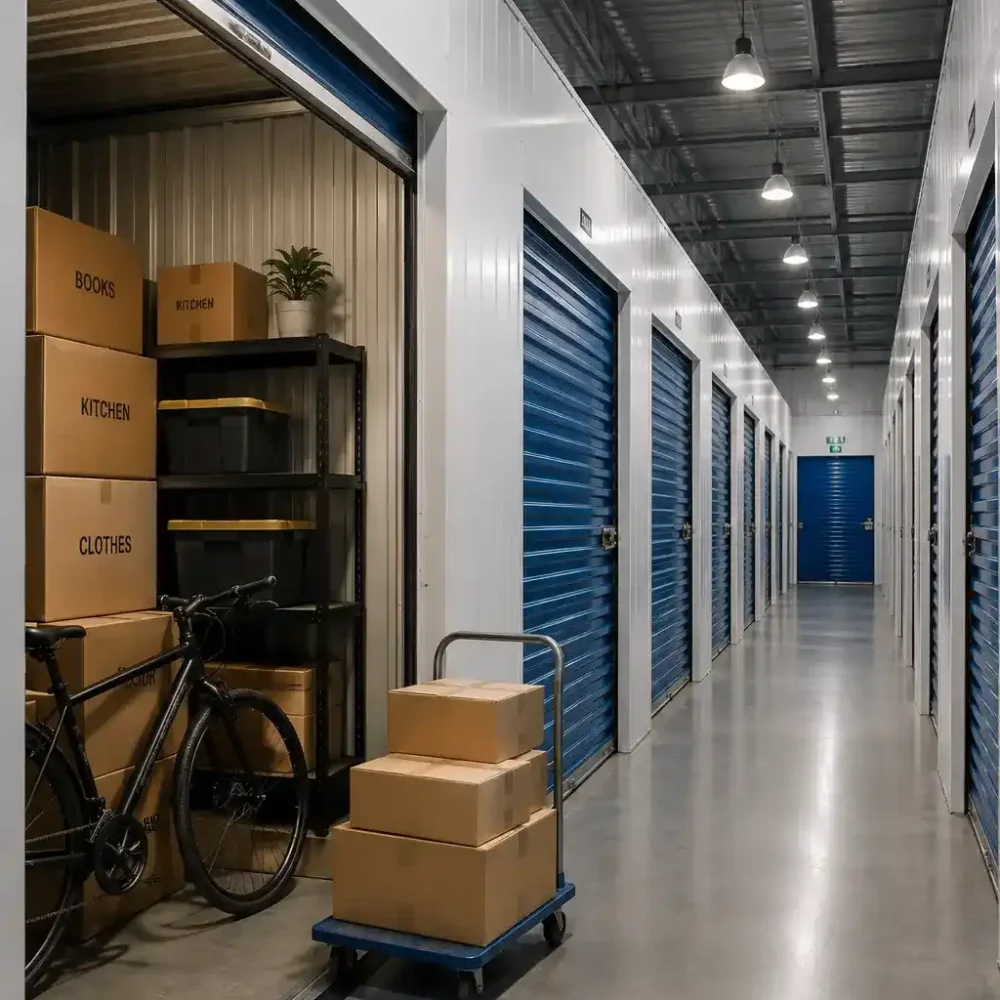
When Storage Becomes the Practical Option
New Property Not Ready Between Tenancies
If your tenancy ends before the new place is ready, storage means you are not moving everything twice or leaving boxes scattered across temporary addresses. Belongings stay put until your move in date is confirmed, and many customers find it easier to store for two or three extra weeks than to arrange a second short term move.
Storage During Home Renovation
Contractors work faster with empty rooms, and your furniture stays out of the dust. A detail people often miss is that soft furnishings such as sofas and mattresses absorb dust and odours far more than hard furniture, so they are usually the first items worth clearing out before work begins.
Storage While Travelling or Living Abroad
Leaving Al Ain for work, study, or a long holiday does not mean leaving valuables sitting in an empty property. Store what you need for the length of your trip and schedule delivery for when you are back, rather than paying for a fully furnished empty home in the meantime.
Downsizing and Decluttering
Moving to a smaller home rarely means you are ready to part with everything at once. Storage buys time to decide what stays and what goes, without cramming your new place. It is also a practical step before listing a property for sale or rent, since uncluttered rooms tend to photograph and show better than full ones.
Business and Office Storage Needs
Office renovations, relocations, seasonal stock changes, and archive management all create short term space problems. Office furniture, retail stock, promotional displays, and business documents can be stored until they are needed again, which frees up working space without committing to a larger lease.
Delayed Furniture Delivery
Many customers buy new furniture before their home is ready or while renovations are still underway. Instead of filling temporary accommodation or leaving deliveries at someone else's property, furniture can be placed into storage until the installation date is confirmed.
Short Term, Long Term, and Flexible Storage Plans
Short term storage suits delayed handovers, renovations, or a wait for new furniture, with belongings going back into use within weeks. Long term storage fits an unused property, an overseas posting, or archived records that need to stay accessible for months or years without cluttering daily space.
Flexible plans exist because most households and businesses do not fit neatly into one category. A family might need long term storage for inherited furniture and short term storage for renovation boxes at the same time. The plan is built around your actual mix of belongings, not a fixed package.
Practical tip: if you are unsure whether you will need an item again within six months, it is usually cheaper to store it than to sell it and repurchase later. The replacement cost for furniture and appliances is almost always higher than a few months’ worth of storage fees.
Facility Standards, Security, Protection, and Insurance
Where belongings are kept matters as much as how they are packed. Our storage facility includes the following standards.
24/7 CCTV monitoring across storage areas, entry points, and loading bays Controlled access limited to authorised staff Scheduled pest control to protect fabrics, wood, and documents from insect and rodent damage Racking and shelving systems that keep furniture off the floor and boxes stacked safely by weight, instead of piled without support Ventilated storage areas that reduce humidity buildup, one of the main causes of mould on furniture and mattresses Optional insurance for stored belongings, worth considering for electronics, antiques, or higher value furniture
Common question: Does humidity really damage stored furniture? Yes. Trapped moisture in wood, upholstery, or cardboard is the single biggest cause of mold, warping, and musty odours during long term storage. This is why ventilation and dry packing matter more than most customers expect, and why a facility with proper air circulation makes a real difference over several months.
Common question: What is the difference between a self-storage unit and a managed storage facility? A self-storage unit provides a locked space, leaving the rest to you, including transportation, packing, and lifting. A managed facility like ours handles collection, packing, placement on shelving, and redelivery as part of the service, which matters most for anyone storing heavy furniture or a large volume of boxes rather than a handful of items.
How Belongings Are Prepared for Storage
Good preparation is what actually protects your belongings, not the storage duration itself.
Clean and dry everything first. Moisture trapped inside upholstery, wooden furniture, or appliance interiors is one of the most common reasons customers notice odours after long term storage. A quick clean and full dry before collection prevents most of this problem entirely.
Use the right packing materials for the item. Moving blankets and stretch wrap protect furniture surfaces during handling, while bubble wrap and corner guards suit glass, mirrors, and artwork edges better. Mixing these up, for example wrapping a wooden dresser in bubble wrap instead of a blanket, often traps moisture against the surface instead of protecting it. Label by category, not just by room. An inventory list with barcode labels or simple item tags makes it possible to retrieve one box of documents or a single appliance without unloading an entire storage bay to find it. Empty appliances fully. Refrigerators, freezers, and washing machines should be defrosted, drained, and completely dry. Leftover moisture inside a sealed appliance is one of the fastest ways to develop mould within weeks rather than months.
Mattresses: clean and dry fully, use a protective cover. This prevents dust, moisture, and odours. Refrigerators and freezers: defrost, clean, leave completely dry. This stops mould before it starts. Washing machines: drain hoses, dry the drum. This avoids trapped moisture damage. Electronics and computers: power down, bundle cables, pack in original boxes where possible. This reduces dust exposure and static damage. Archive boxes and documents: use sturdy cartons, avoid overfilling. This prevents warping and keeps files retrievable. Wooden and leather furniture: clean, dry, wrap in moving blankets. This preserves the finish and prevents cracking. Glass and artwork: wrap individually with bubble wrap and corner guards. This prevents chips and surface damage. Common question:
Can electronics be stored immediately after use?
It is better to let them cool and power down fully first. Packing a warm television or computer straight into a sealed box can trap condensation inside the casing, which is a common and avoidable cause of damage.
Items That Cannot Be Accepted for Storage
Flammable liquids and fuels Gas cylinders and pressurised containers Fireworks, explosives, and hazardous chemicals Perishable food and beverages Live plants and animals Illegal or prohibited goods Wet, mouldy, or contaminated belongings Unsealed paints, solvents, or corrosive materials
Should I photograph valuables before storing them?
Yes. A dated photo of higher value furniture, electronics, or collectibles is useful for insurance purposes and gives you a clear reference for condition at collection. Cash, passports, and jewellery are best kept with you rather than placed in storage at all.
What Determines the Cost of Storage in Al Ain
Volume of belongings: more furniture or boxes require more storage space. Storage duration: longer periods affect the overall cost. Packing requirements: professional packing and protective materials, if needed. Collection and redelivery: access, distance, and scheduling. Special handling: fragile items, antiques, or oversized furniture. Insurance: optional coverage for higher value belongings.
Is storage cheaper than renting a bigger apartment?
For most households, yes. A few months of storage for excess furniture typically costs a fraction of the rent difference for a larger unit, especially when the extra space is only needed temporarily rather than long term.
The fastest way to a firm quote is sending photos or an item list over WhatsApp. This reflects your actual belongings far more accurately than an estimate based only on the number of rooms in your home, and it usually means a more accurate price the first time round.
Situation and Suitable Storage Solution:
New property not ready: temporary storage with scheduled redelivery. Home renovation: household storage until work is completed. Extended travel: flexible monthly storage Office refurbishment: business furniture and equipment storage Extra business inventory: commercial storage based on volume Downsizing: long-term storage for selected belongings
Common question: Should I store furniture or sell it before a move? If a piece will not fit your next home or you are unsure when you will need it again, storage is usually cheaper than replacing it later. Selling only makes sense for furniture you are confident you will not want back.
Storage Options Based on What You Need to Keep
Household and Personal Belongings
Packed boxes, bedroom furniture, dining sets, sofas, kitchenware, clothing, books, luggage, and approved appliances all fall under household storage. Grouping similar items by room before collection, rather than mixing categories into the same boxes, makes unpacking noticeably faster once your belongings come back.
Business, Office, and Commercial Contents
Workstations, filing cabinets, retail stock, promotional materials, and exhibition displays can be stored during a relocation or refurbishment. Keeping furniture and inventory separate lets a business relocation happen in stages instead of one disruptive move that shuts operations down for a full day.
Documents and Archive Storage
Older files do not need to sit in prime office space. Archive boxes with barcode labels or clear item tags make specific documents easy to locate months later, instead of requiring a full search through unmarked cartons every time a file is needed.
Items That Need Extra Care
Wooden furniture, leather sofas, glass tabletops, artwork, mirrors, and mattresses respond differently to humidity and handling than everyday boxes. Flag these before collection so the right protective covers, corner guards, or crating can be used, since standard cardboard boxes are rarely enough protection for glass or framed artwork.
From Collection to Storage and Redelivery
Common question: Can I retrieve a single box without unpacking the whole storage unit? If your items were tagged and logged individually at collection, yes. This is exactly why itemised labelling matters more for long-term storage than it does for a short, one-off move.

Request an Estimate

Pack, Label, and Collect

Organised Facility Storage

Retrieval and Redelivery
Storage Support Across Al Ain
Collection and redelivery run across Al Jimi, Al Muwaiji, Al Towayya, Al Hili, Zakher, Al Maqam, Al Foah, Al Sarooj, Al Bateen, Al Markhaniya, Al Noud, Falaj Hazza, Asharej, Al Khabisi, Al Dhahir, Al Yahar, and the Al Ain Industrial Area. Belongings are picked up from your home, villa, or office and returned wherever you need them.
Common question: Can I arrange storage if I am relocating to another emirate? Yes. If a new property in Abu Dhabi, Dubai, Sharjah, or elsewhere in the UAE is not ready yet, belongings can stay in storage until your delivery date is confirmed, so your move is not held up by the new property’s timeline.
Request your services
Why Choose Managed Storage Services in Al Ain?
A storage unit alone still leaves you handling transport, packing materials, and heavy lifting yourself. A managed service brings collection, packing, insured and monitored storage, and redelivery together under one booking. This is especially useful when moving large furniture or a full office that would otherwise take several trips and extra labour to shift on your own.
Request a storage estimate today, or send your item list on WhatsApp for a fast, accurate quote
Frequently Asked Questions About Storage Services in Al Ain
Storage makes sense when belongings cannot go straight to their final destination because a property, office, or renovation is not ready. If everything can move in one day, you likely do not need it.
Only if it goes in damp or dirty. Fully dried, clean furniture kept in a ventilated, pest controlled facility rarely develops mould, even over several months.
Bulky items like wardrobes and beds are usually easier and safer dismantled, while smaller furniture can stay assembled. Access at your property often decides which makes more sense.
Yes. A simple list with photos confirms exactly what was collected and makes it far easier to spot anything missing or damaged at retrieval.
Anything with trapped moisture, food residue, leak prone batteries, or hazardous materials. These cause the most storage complaints, usually reported months later when it is too late to prevent the damage.
A few days' notice is usually enough for most household orders, though larger office or full household redeliveries benefit from a week's notice to arrange transport and access.