
Commercial Movers in Al Ain | Insured Office, Shop & Business Relocation
Moving a business can mean downtime, disrupted operations, and lost customers. We handle office, shop, warehouse, showroom, and commercial relocations with a plan built around your business.
From packing and furniture moving to transport and setup, we make your move organised and hassle-free.
- Office & Business Relocation
- Shop, Retail & Warehouse Moving
- Packing, Transport & Setup
- Al Ain & UAE-Wide Moves
- Our Services
Commercial Moving Services in Al Ain
No two businesses move the same way. An office relocation is mostly about workstations, servers and files. A retail move involves shelving, stock and shopfront fixtures. A warehouse relocation deals with pallets, racking and machinery. We structure each move around what your business actually operates, not a generic checklist.
Warehouse & Industrial Moving
Clinic & Professional Premises Moving
Restaurant, Café & Commercial Space Moving
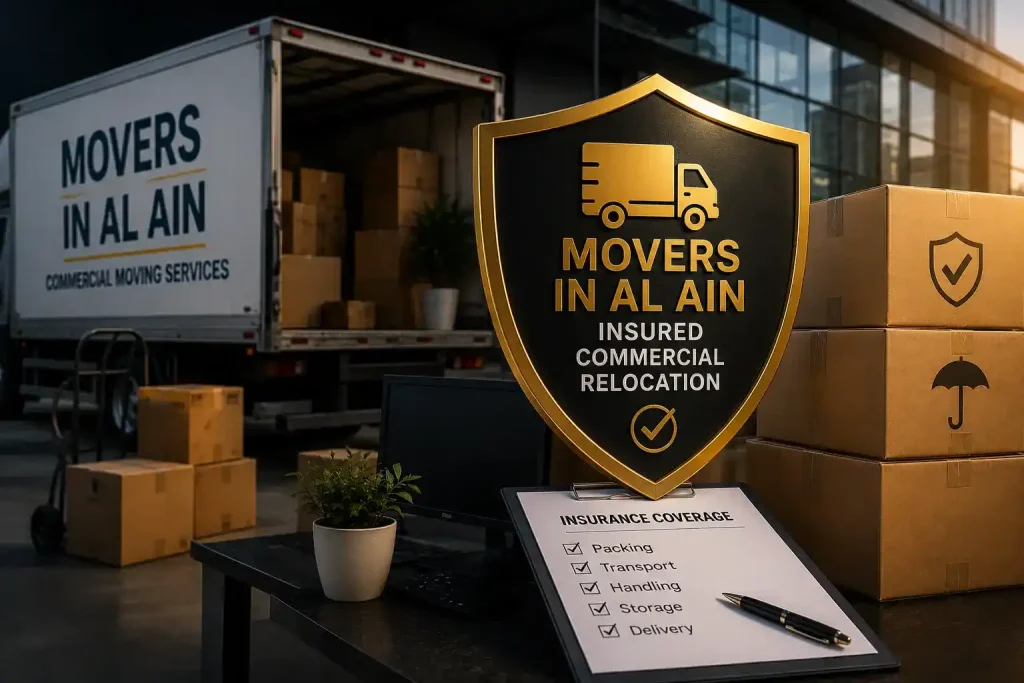
Insured Commercial Relocation
Business assets carry real financial value, and a relocation should not put that value at risk. Our commercial moves in Al Ain include goods-in-transit insurance cover, so furniture, equipment, stock and fixtures are protected against loss or damage while they are being packed, loaded, transported and delivered. Before your move, we can walk you through the coverage that applies to your relocation and outline options for additional cover on high-value items such as servers, specialised machinery or showroom fixtures. Having insured movers handle a business relocation gives owners and facilities managers one less variable to manage during an already demanding transition.
Commercial Packing & Labelling
Mixed or poorly labelled boxes are one of the biggest causes of slow setup after a business move. Documents, stock, furniture components, electronics and general supplies are packed differently because they behave differently in transit.
We label boxes and items by department, room, workstation, shelf or stock category, matched to how your business is actually organised. That way your team knows exactly where each item belongs the moment it arrives.
Packing can be arranged as a standalone service if you only need materials and packing support rather than a full relocation.
Furniture Dismantling & Reassembly
Commercial furniture is frequently too large to move in one piece. Workstations, conference tables, counters, shelving units, cabinets and display fixtures often need to be dismantled first.
Whether an item needs dismantling depends on its size, the access route, doorways, corridors, stairs and lift dimensions. At the new premises, furniture is reassembled according to the agreed floor plan, so your team is not left rebuilding desks and shelving after the move.
Moving Business Equipment & Electronics
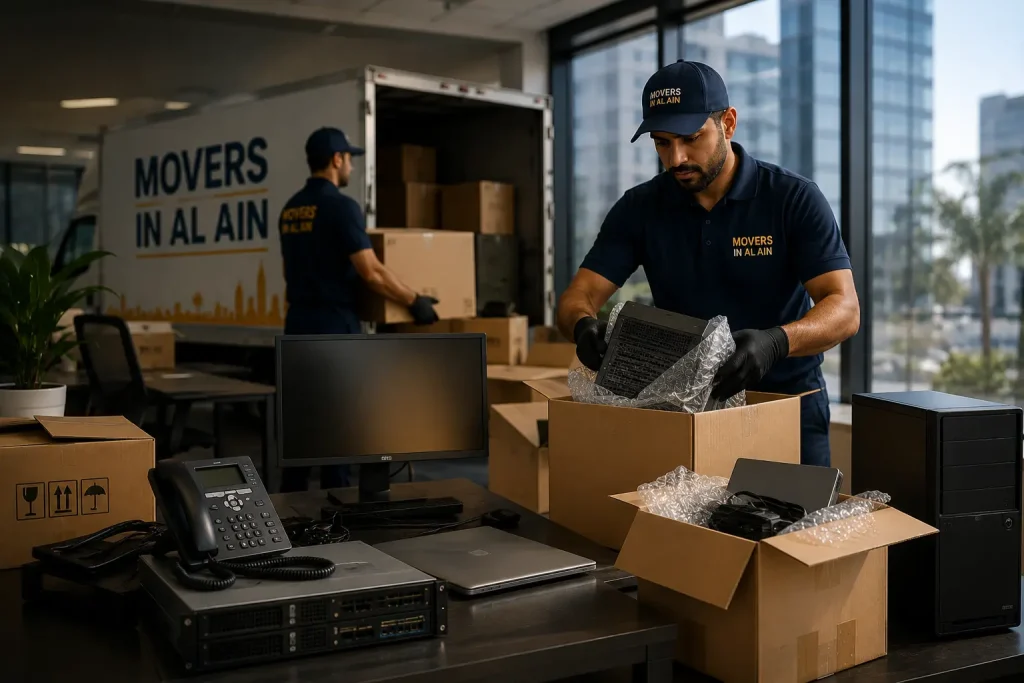
Computers, monitors, printers, photocopiers, screens, and network equipment need a different level of care than general furniture. As commercial movers in Al Ain, we identify this equipment ahead of moving day so it is handled and transported with the right protection.
For servers and shared network infrastructure, we recommend coordinating disconnection and reconnection with your IT provider, since these systems often follow a different schedule than individual staff workstations. Flagging specialized equipment early prevents it from being treated as ordinary cargo on the day.
Moving Stock, Inventory & Business Assets
A commercial relocation often covers more than furniture and electronics. Depending on your business, this can include:
- Retail stock and merchandise
- Warehouse and bulk inventory
- Shelving and storage systems
- Office supplies and stationery
- Display materials and signage
- Documents and archive boxes
- Computers, monitors and servers
- Printers and photocopiers
- Reception and customer-area furniture
- Showroom fixtures
- Desks, chairs, tables and cabinets
- Seasonal and promotional materials
- Specialised business equipment
Mapping this list out before the move makes the transport plan far more accurate than estimating by box count alone.
Temporary Commercial Storage
Not every business can move from one premises straight into another on the same day. Renovation work, an incomplete fit-out, a lease handover date, or a phased branch consolidation can all create a gap between collection and final delivery.
As commercial movers in Al Ain, we offer temporary storage for furniture that is not needed immediately, surplus stock, archive documents, seasonal displays, spare shelving, and items waiting for a new unit to be ready. This lets your relocation schedule follow your business timeline instead of forcing everything into a single moving date.
Planning a Commercial Move Around Your Business
The right moving plan depends on how your business runs day to day, not just its floor area.
Customer-facing areas. Reception desks, retail counters and displays often need to be ready first, so the business can reopen looking organised.
Employee workstations. Labelling each desk alongside its computer, chair and files makes setup far easier once staff return.
Stock and inventory. Retail and warehouse stock should follow the categories or systems your team already uses, not a new labelling scheme invented for the move.
Storage and archives. Documents and archive boxes stay grouped by department or cabinet so they can be found quickly afterward.
IT and communication systems. Computers, internet connections, phone lines and shared technology need to be coordinated with your technical team ahead of the move.
Large and specialised items. Photocopiers, safes, display screens, heavy equipment and other unusual items should be flagged before the move so access and handling can be planned properly.

Building Access & Loading Arrangements
Commercial moving schedules are shaped by the building as much as by the distance between two properties. Before moving day, we confirm:
- Pickup and delivery addresses
- Floor numbers and building layout
- Parking and loading zone availability
- Service lift access and booking requirements
- Building management procedures and permits
- Security and access card requirements
- Permitted moving hours
- Oversized furniture or equipment restrictions
- Any limits on trucks or loading vehicles
Shopping centres, office towers, warehouses and clinics each tend to have different access rules, and confirming them early keeps the schedule predictable instead of reactive.
Request your services
Commercial Moving Survey & Planning
A moving survey establishes what actually needs to move and how the relocation should be sequenced. For smaller businesses, photos or a short video walkthrough is often enough for an initial assessment. Larger relocations benefit from a closer review of the premises.
Useful details include current and new location, number of rooms or departments, approximate workstation count, furniture type and quantity, stock or inventory volume, large or specialised equipment, storage or archive areas, floor levels, lift and loading access, preferred moving date, and whether temporary storage is needed.
The goal of a survey is understanding the relocation, not just counting boxes.
Businesses across Al Ain operate from very different types of premises, and access requirements shift with the area. We plan moves for offices around the Central District, retail businesses near major shopping areas, and warehouse or industrial operations in Sanaiya, along with businesses based in Al Muwaiji, Al Jimi, Al Towayya, Al Markhaniya, Al Maqam, Zakher, Al Foah, Al Hili and Al Yahar.
For every area, we factor in access, parking, loading arrangements, building rules and the type of business being relocated before confirming a moving date.
Some businesses need a short relocation within Al Ain. Others are moving a branch, warehouse, or office to a different emirate entirely.
Distance changes the logistics, but the fundamentals stay the same: understand the inventory, prepare property access, plan the packing, protect equipment in transit, and confirm what needs to be operational first at the destination. Whether the move is across town or across the UAE, the plan is built around your actual requirements, not a fixed template.
What Affects Commercial Moving Costs?
Commercial moving costs vary because businesses differ significantly in what they need moved. A quotation is typically shaped by:
- Quantity and type of inventory
- Number of workstations
- Volume of furniture
- Dismantling and reassembly requirements
- Computers and business equipment
- Stock and warehouse contents
- Large or specialised items
- Number of floors and lift availability
- Loading and parking conditions
- Distance between properties
- Packing requirements
- Temporary storage needs
- Preferred moving schedule
- Number of departments or areas involved
- Level of insurance cover required
A small office with basic furniture requires a very different plan from a warehouse full of stock or a retail shop with extensive fixtures. Sharing photos, an approximate inventory, both locations and a preferred date helps produce a realistic initial quote.
Our Commercial Moving Process

Assess Your Move

Pack & Prepare

Transport Your Business Assets

Set Up Your New Space
Why Plan a Commercial Relocation Properly
A commercial move succeeds when a business can start operating from its new premises without a prolonged disruption. Careful planning prevents the most common relocation problems:
- Mixed-up or unlabelled boxes
- Missing inventory
- Furniture arriving with no clear destination
- Unplanned, last-minute dismantling
- Delayed access to the new property
- IT equipment disconnected earlier than necessary
- Slow workstation setup
- Unnecessary handling or storage costs
- Delays caused by loading restrictions
Our approach starts with understanding how your business operates, then builds the moving plan around that, backed by insured handling from packing through to delivery.
Commercial Movers in Al Ain for Every Business Type
Businesses do not all move the same way, and we plan relocations for:
- Offices and corporate workplaces
- Retail shops and boutiques
- Showrooms
- Warehouses and industrial units
- Clinics and medical premises
- Training centres and studios
- Restaurants and cafés
- Business centres
- Professional and consulting offices
- Branches and commercial units
- Small and growing businesses
If your premises hold furniture, stock, equipment, documents, fixtures or any other commercial assets that need to move, the plan can be built around exactly what you have.
Frequently Asked Questions About Moving in Al Ain
We handle offices, shops, warehouses, showrooms, clinics, restaurants, training centers, professional premises, and business centers. The plan depends on the type and volume of items involved.
Yes. Our commercial relocations include goods-in-transit insurance covering furniture, equipment and stock while they are being packed, loaded, transported and delivered. We can discuss additional cover for high-value items such as servers or specialized machinery before the move.
It depends on the size and complexity of the move. A small office with limited inventory needs less lead time, while a warehouse, large office, or multi-floor premises benefit from more preparation for packing, access arrangements, and scheduling.
Yes. You can decide what moves directly, what goes into temporary storage, and what stays at the current premises. This is especially useful for phased retail or branch relocations.
Yes. Warehouse relocations can be staged so the business keeps operating during the transition, with inventory, shelving, equipment, and office areas scheduled according to operational priorities.
Yes. Workstations, desks, conference tables, counters, cabinets, shelving and display units are dismantled and reassembled where their size or the access route makes that necessary.
Yes, either as part of a full relocation or as a standalone service if you only need packing support.
Yes. Computers, monitors, printers, photocopiers, and screens are included in the moving plan. We recommend coordinating sensitive IT disconnection and reconnection with your own technical provider.
Yes. Temporary storage is useful when the new premises are under renovation, when a move is happening in phases, or when some items cannot be delivered immediately.
Unconfirmed building access, unavailable loading areas, unclear moving hours, unlabeled items, oversized furniture, and equipment still in use when packing starts are the most common causes. Confirming these details beforehand keeps the schedule on track.
Ready to Plan Your Business Move?
Whether you are moving an office, shop, warehouse, showroom, clinic, or restaurant, start with the essentials: what you are moving, where it is going, when you need to move, and what your business needs to keep running.
Share your current and new locations, preferred moving date, business type, and a few photos of the premises, and we will use those details to scope your relocation and outline the next step, backed by insured handling throughout.